Redesigning travel app: optimizing expence managment on the go
Travel application to optimize and speed up expense registration on the go
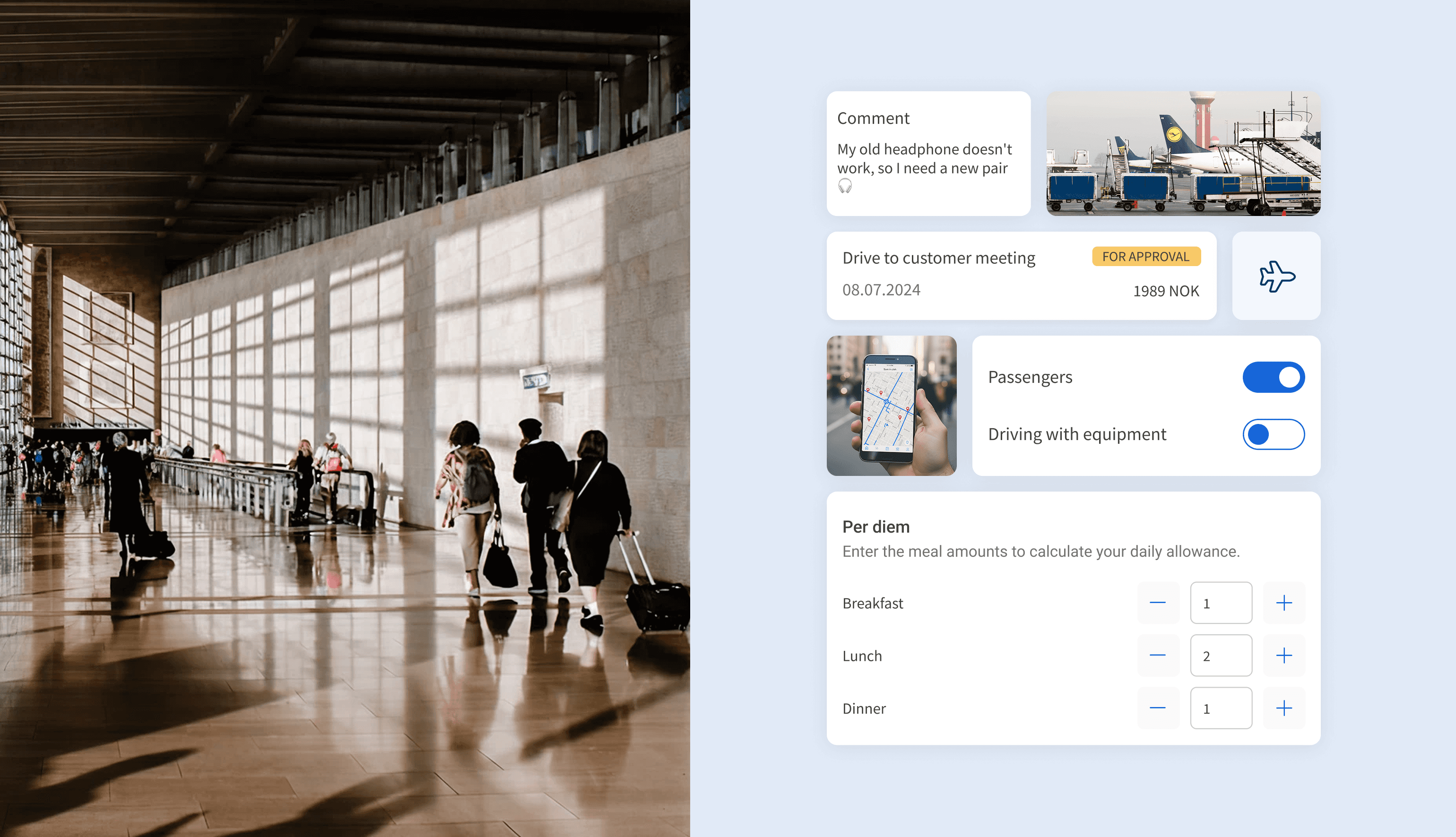
Project Overview
My role:
UI/UX Designer
Timeline:
2024-2025
Deliverables:
Design audit
User research
Workshops
UI/UX design
Prototypes
Summary
The existing travel and expense web application created friction for employees managing expenses while traveling, especially for employees on the go. Working closely with the Product owner and Lead developer, I led the design of mobile-first application. The goal was to create an experience that worked within our web application constraints while eliminating the pain points that made expense tracking a time-consuming and unintuitive task.
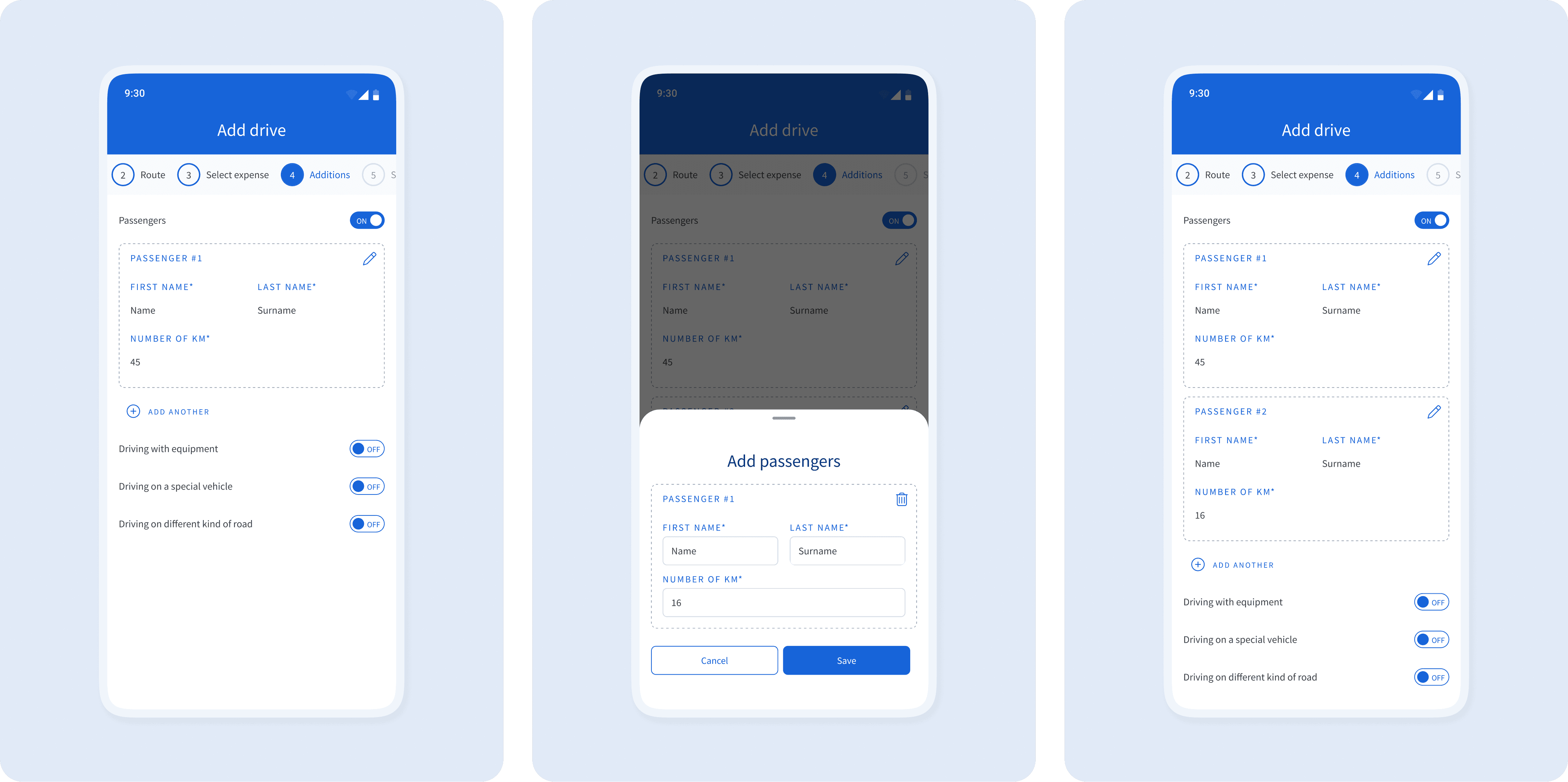
The mobile designs rely on the web version data structure but introduce a redesigned step-by-step flow specifically to allow employees to register expences on the go.
With no baseline user data available, I grounded the design decisions in realistic usage scenarios validated internally. The app is currently in development, with core flows completed. The first module is in testing, and feedback from this phase will inform future refinements before pilot user testing and broader release.
Problem area
The web application wasn't built for mobile use, creating hastle when employees actually had to log expences on the go. This led to workarounds, lost receipts, and often delayed reimbursements.
The project lacked both clear documentation and reliable user data, which meant design decisions had to be made with limited visibility into common usage patterns and user pain points.
Design process
I began with structural analysis of existing web application to understand its logic and technical constraints, then mapped these findings into user flows. In collaboration with Product owner and Lead developer, I defined how the mobile experience would diverge from the web to better suit mobile contexts while maintaining compatibility with the legacy backend.
A key constraint emerged midway through: the new mobile design system we were developing wasn't ready for implementation. Rather than delay the project, I adapted existing web patterns where they translated well to mobile and redesigned components that didn't to maintain a visual consistency without compromising usability.
The first module moved into testing, and will provide the validation of these adapted patterns. Remaining modules are progressing in phases, allowing me to incorporate testing insights into designs as development continues.
Design Solution
Status and next steps
All the core design flows have been delivered to the developemtn team. With the first module now in testing, we're validating design assumptions against real usage for the first time. This feedback will inform refinements to remaining modules before we move to proper user testing, where we'll measure task completion efficiency and satisfaction before broader rollout.
This approach allows us to pivot based on actual usage rather than assumptions, given the absence of initial user data.