From complexity to clarity: simplifying skill distribution and complience tracking through competence processes
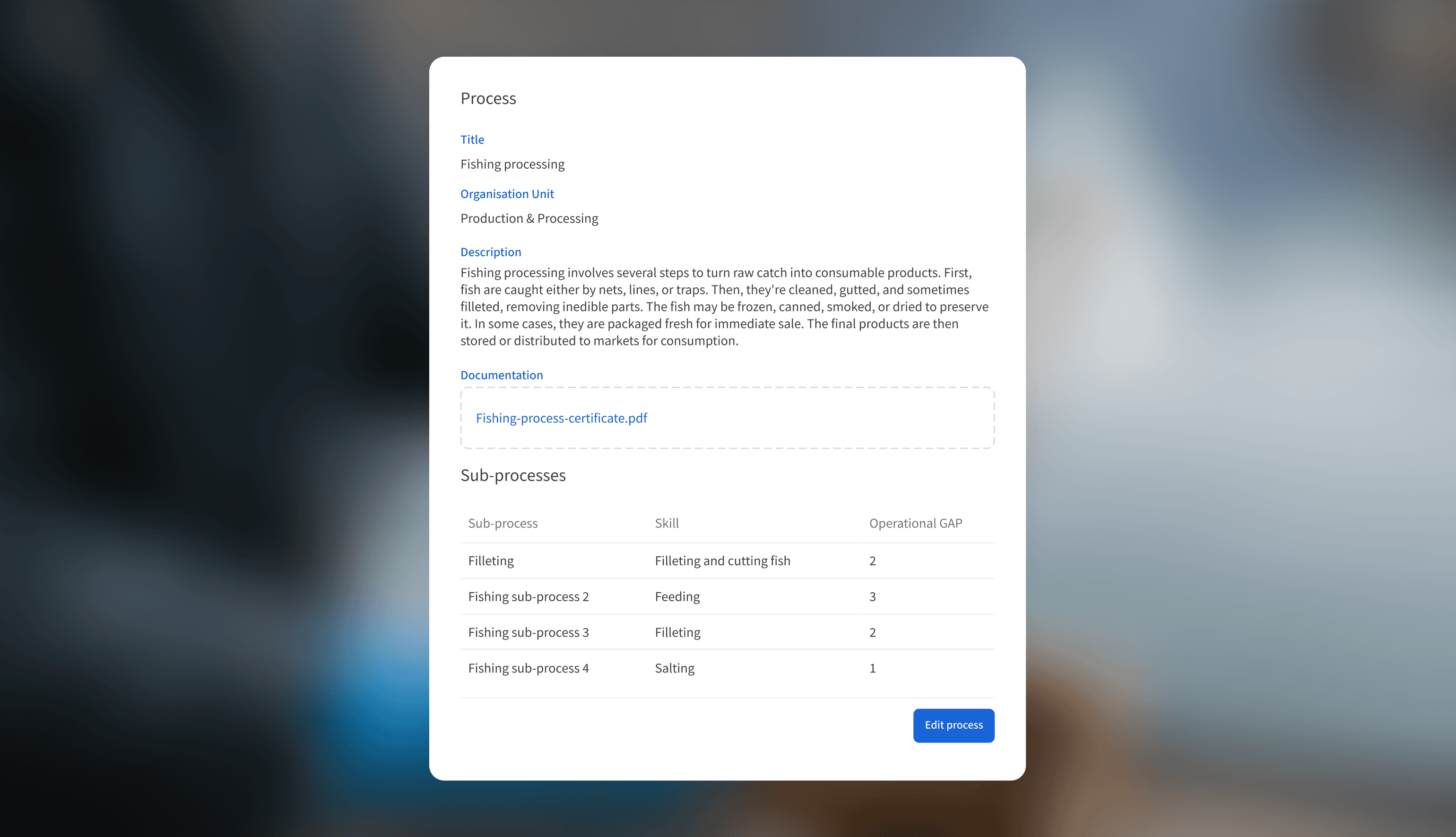
The goal of this project was to build a new module that gives companies a clear overview of critical skills across their organization
Project Overview
Role:
UI/UX Designer
Product owner (covering for a colleague)
Timeline:
2024-2025
Deliverables:
Workshops
User research
User flows
Specification
Redesign of existing functionality
UI/UX design
Final designs deliverables
Summary
The goal of this project was to build a new module that gives companies a clear overview of critical skills across their organization. It helps teams understand whether required competencies are in place and meet internal or external compliance standards.
At the start of the project, I was responsible for shaping the initial design direction and supporting early discovery. This included understanding user needs, clarifying product requirements, and aligning design decisions with the broader product goals.
When unexpected circumstances emerged, the project was at risk of not delivering new functionality on time.
I took on additional responsibility for planning and coordination, worked closely with the Chief Product Owner, and supported the team with organizational and administrative tasks.
These efforts helped stabilize the project and ensured it was released on schedule. While the solution required further refinement after launch, the existing roadmap remained on track and was not disrupted.
Design process
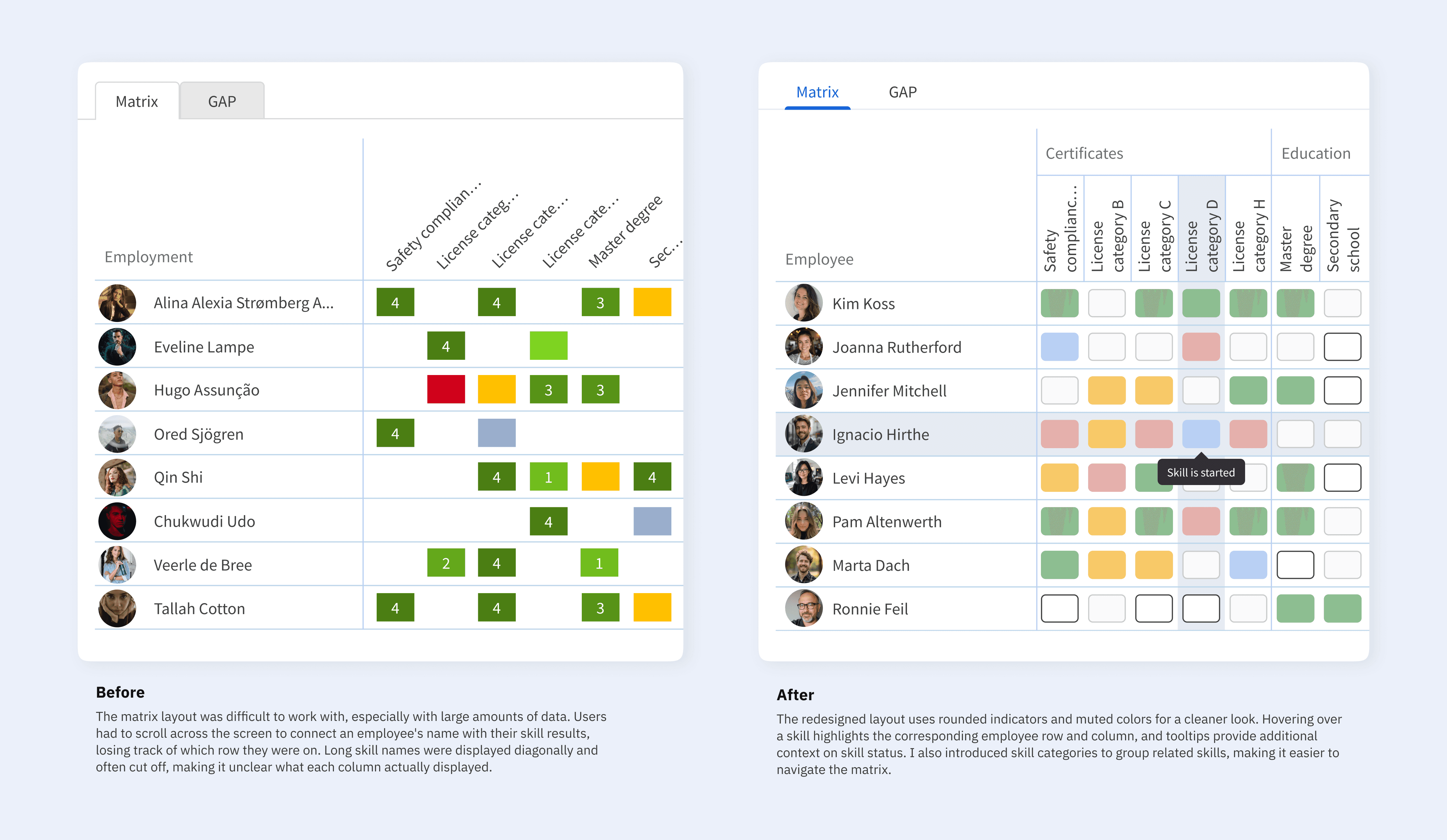
I started with customer workshops to understand how teams actually manage work processes and think about skill requirements. The aim was to create a solution where companies could clearly define process specific skills requirements and connect them to their employees. The redesign of the skill matrix became a core focus, as it needed to show whether whether the organization had the right people with the right skills to work on their processes.
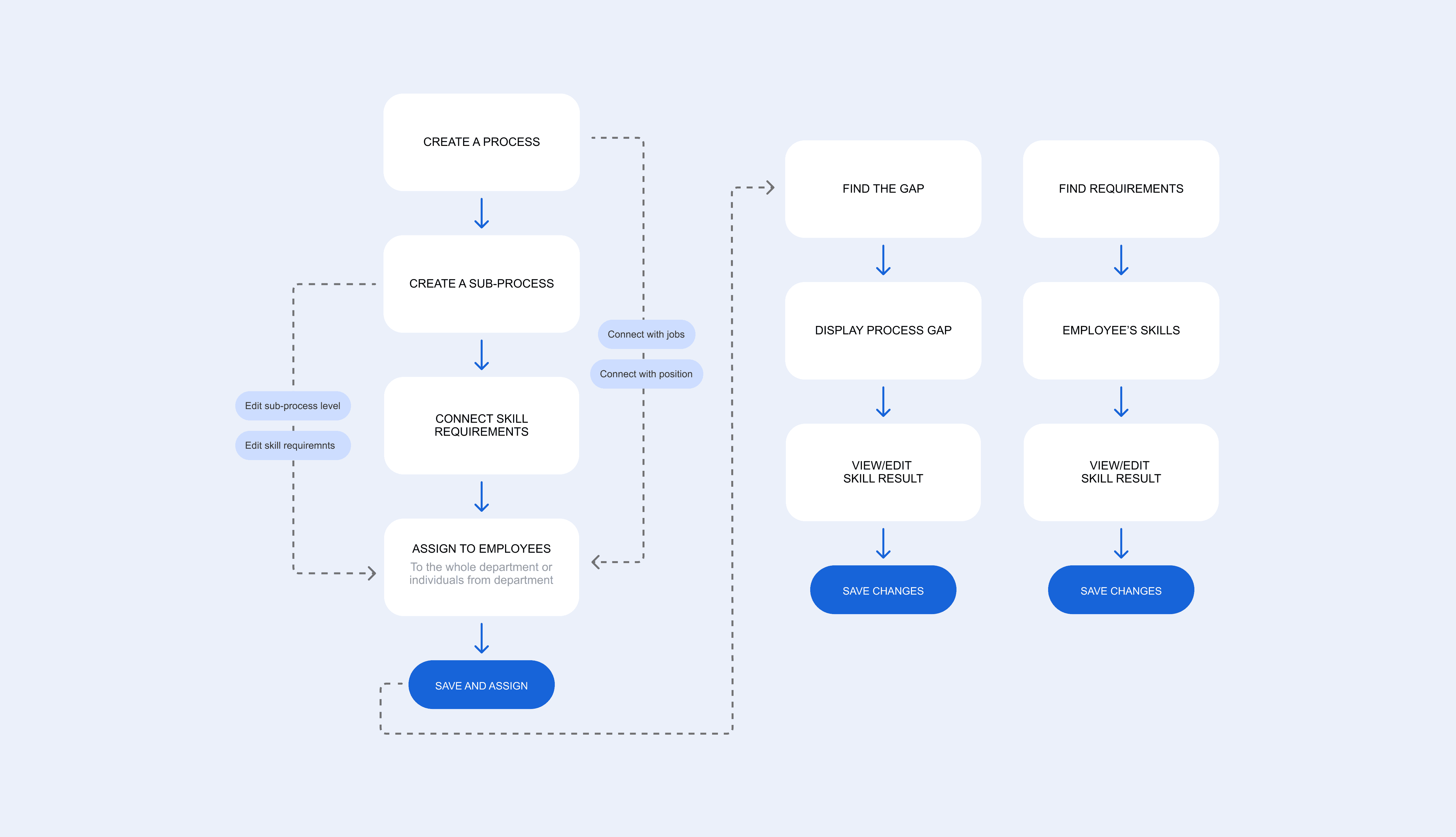
Working closely with the Product Owner, I developed user flows that reflected how users would set up processes, assign skill requirements, link them to employees, and interpret matrix results. We reviewed and refined these flows together with customers to ensure they matched real workflows and supported business objectives. Once the direction was confirmed, I translated the concepts into high-fidelity prototypes and redesigned the existing matrix to support the new functionality.
Situational risk
Midway through development, the Product Owner had to step away due to extended sick leave, leaving the project without a clear decision-maker. With customers expecting delivery and open questions accumulating around feature scope and technical trade-offs, the timeline was at risk.
My approach
With no immediate replacement for the Product Owner, I took on the responsibility of keeping the project moving. I handled ongoing communication with stakeholders, clarified questions around specifications,and ensured the development team had what they needed to continue working without unnecessary blockers.
I worked closely with developers and QA to meet the deadline. We focused on delivering a solid core experience and deferred nice-to-have features for future iterations. This approach allowed us to ship a functional product on time while leaving space for improvements later on.
Selected visuals
Making matrix readable
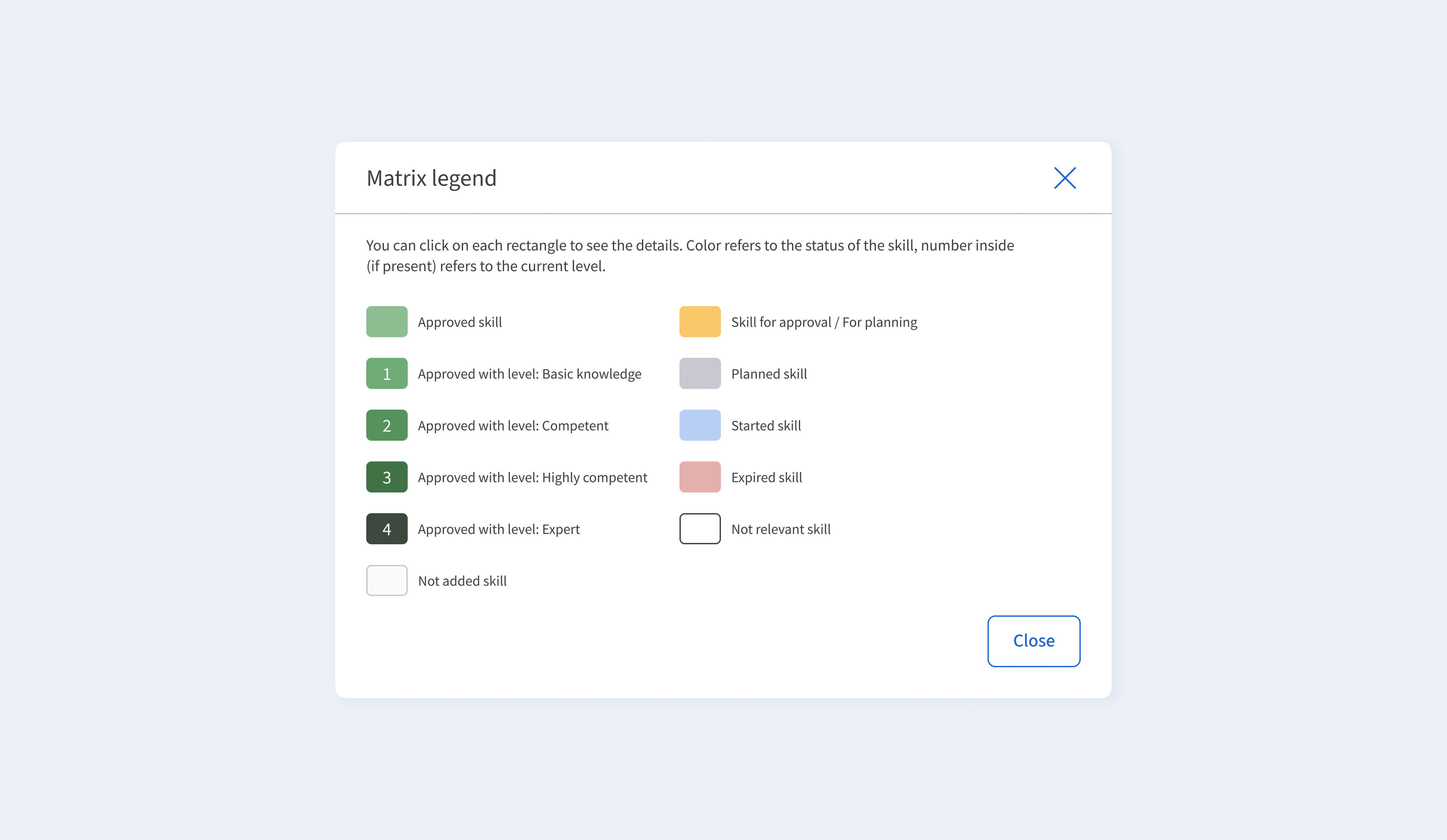
The original legend had a single row of colored rectangles tucked on top of the table, making it difficult to read. Since the legend serves as the visual key to interpreting skill status and proficiency levels, I redesigned it as a structured modal that displayed each color individually with clear explanations.
This change improved usability for both new users, just learning the system, and experienced users who relied on their old knowledge. It eliminated ambiguity and made matrix interpretation faster and more accurate.
Reflection
The module launched on schedule, and customers were able to start using it right away. Early usage revealed areas for refinement, which we addressed in following iterations based on user feedback.
This project highlighted the importance of cross-functional collaboration and good prioritization under constraint. When unexpected challenges emerge, clear communication and thoughtful decision-making can keep things moving forward without compromising on quality.